Introduction
Pipeline Integrity Management Plans (IMP) are structured engineering programs designed to ensure the safe operation, reliability, and longevity of pipeline infrastructure.
Modern pipeline operators must maintain comprehensive integrity strategies to comply with international standards such as:
➤ API 1160 – Pipeline Integrity Management
➤ ASME B31.8S – Managing System Integrity of Gas Pipelines
➤ API 580 / API 581 – Risk-Based Inspection
➤ ISO Pipeline Safety Frameworks
One of the most valuable technologies supporting these programs is Long Range Ultrasonic Testing (LRUT).
LRUT provides efficient screening of large pipeline sections and enables asset integrity teams to identify potential corrosion zones quickly and cost-effectively.
What is a Pipeline Integrity Management Plan (IMP)?
An Integrity Management Plan is a comprehensive framework used by pipeline operators to monitor, assess, and maintain pipeline condition throughout its operational life.
IMP programs typically include:
➤ Risk assessment
➤ Inspection strategies
➤ Corrosion monitoring
➤ Maintenance planning
➤ Failure prevention
➤ Regulatory compliance
➤ Long-term asset reliability management
The goal of IMP is to prevent pipeline failures while optimizing maintenance resources.
Challenges in Managing Large Pipeline Networks
Pipeline operators often face several challenges when implementing integrity programs:
➤ Extensive pipeline networks
➤ Aging infrastructure
➤ Corrosion under insulation (CUI)
➤ Limited access for inspection
➤ High inspection cost
➤ Restricted shutdown windows
➤ Environmental and regulatory constraints
Traditional inspection methods alone cannot efficiently monitor large pipeline systems.
This is where LRUT becomes extremely valuable.
How LRUT Supports Integrity Management Plans?
Long Range Ultrasonic Testing plays a strategic role in IMP programs by enabling efficient pipeline screening and corrosion detection.
LRUT supports IMP objectives in several ways:
🔹 Large-Scale Pipeline Screening
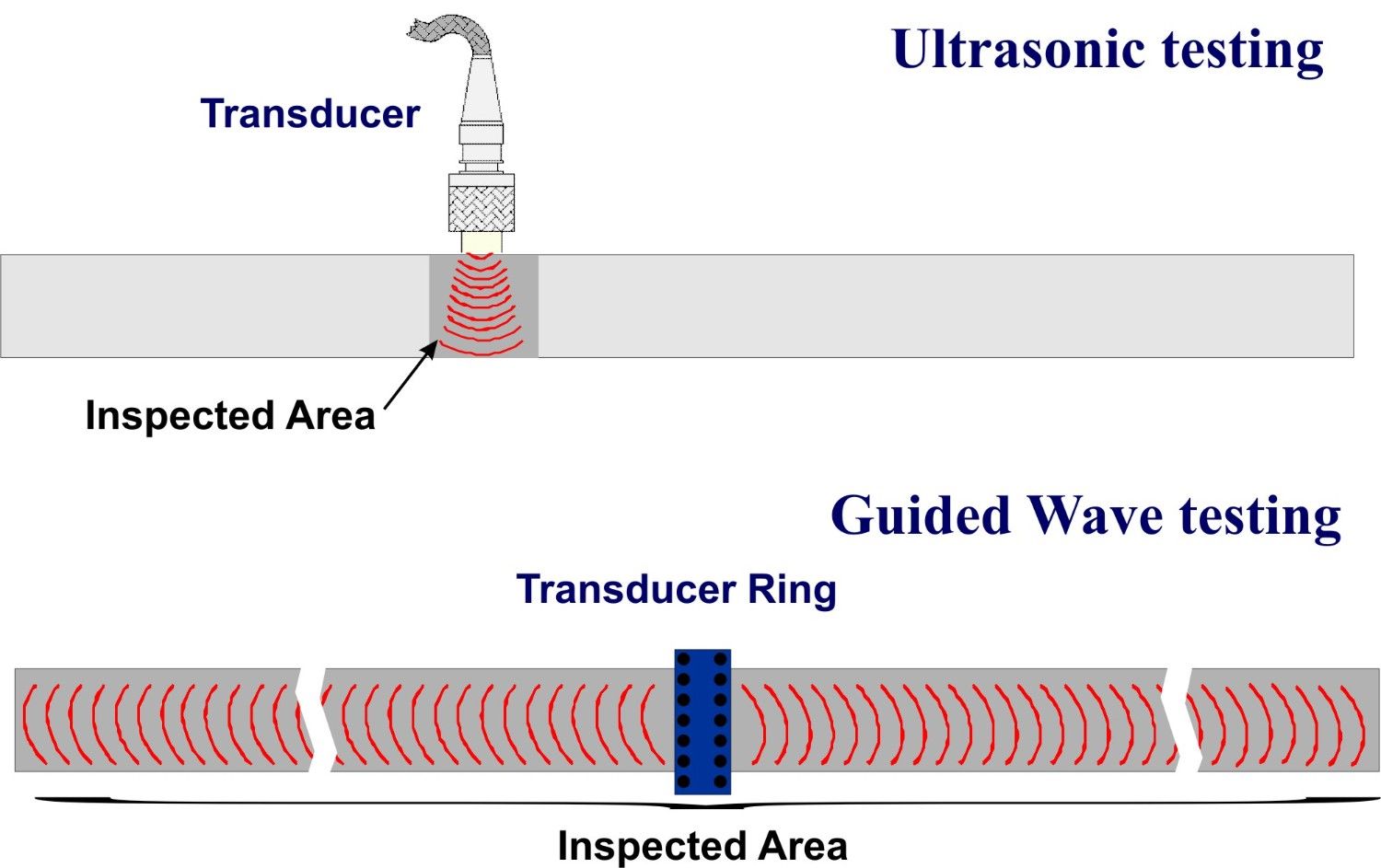
LRUT can inspect long pipeline sections from a single test location, allowing operators to quickly evaluate extensive pipeline networks.
🔹 Early Detection of Corrosion
Guided wave signals detect cross-sectional changes caused by corrosion, erosion, or metal loss.
🔹 Identification of High-Risk Zones
LRUT helps identify sections that require detailed follow-up inspection.
🔹 Reduced Inspection Costs
By screening pipelines efficiently, LRUT reduces the need for widespread excavation or insulation removal.
LRUT in the Integrity Management Workflow
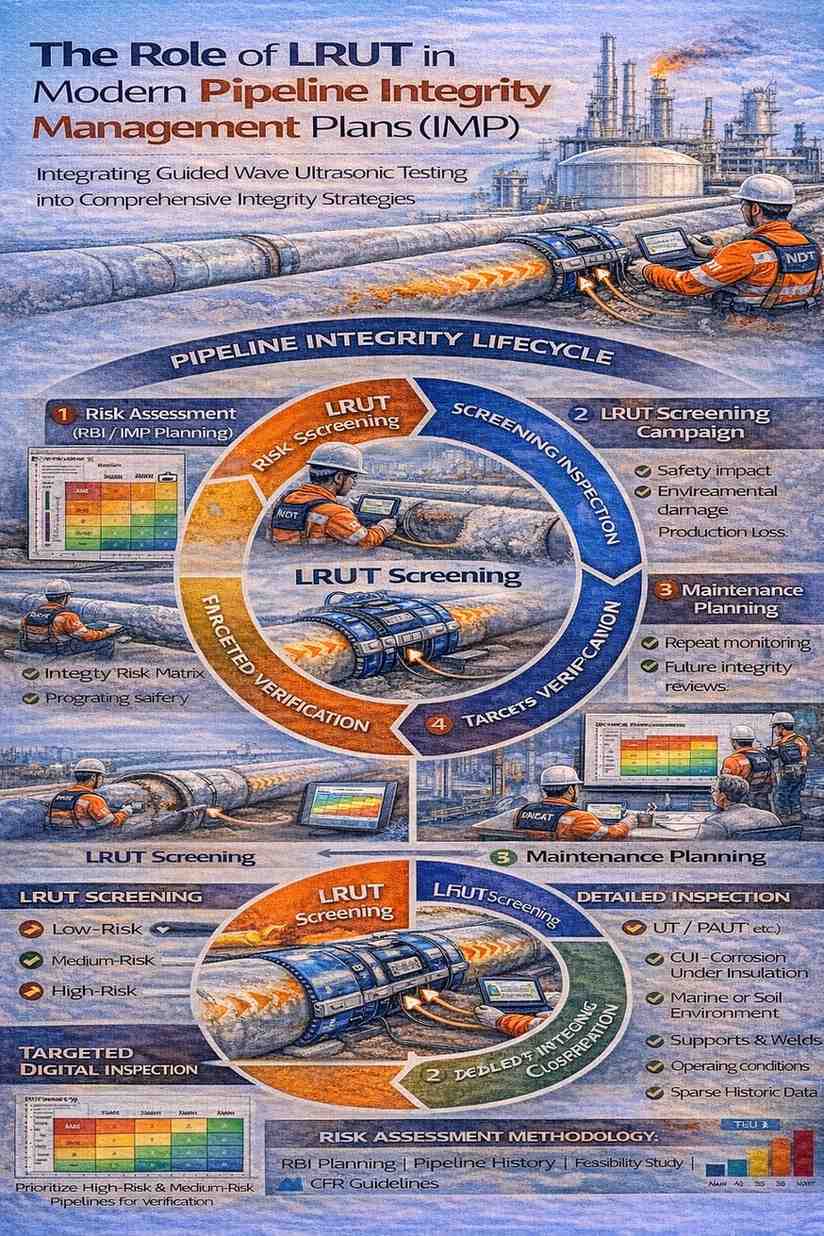
A typical IMP inspection strategy using LRUT includes:
➤ Pipeline risk assessment
➤ LRUT screening campaign
➤ Indication classification (High / Medium / Low)
➤ Targeted verification using conventional UT or advanced NDT
➤ Maintenance or repair planning
➤ Documentation and reporting
➤ Repeat monitoring for long-term integrity tracking
This workflow ensures efficient inspection while minimizing operational disruption.
Key Applications of LRUT within IMP Programs
LRUT is commonly used in IMP strategies for:
➤ Aboveground transmission pipelines
➤ Cross-country pipelines
➤ Insulated pipelines prone to CUI
➤ Pipe racks in refineries and petrochemical plants
➤ Tank farm transfer lines
➤ Offshore topside pipelines
➤ Industrial utility corridors
➤ Water and slurry pipelines
These applications benefit significantly from long-range screening.
Benefits of LRUT for Pipeline Integrity Programs
Integrating LRUT into integrity management strategies provides several benefits:
✔ Rapid screening of long pipeline sections
✔ Improved corrosion detection
✔ Reduced inspection cost
✔ Improved maintenance prioritization
✔ Better risk management
✔ Support for regulatory compliance
✔ Enhanced long-term monitoring capability
These advantages make LRUT an essential tool for modern integrity programs.
Engineering Expertise is Essential
Successful integration of LRUT into IMP programs requires:
➤ Proper feasibility assessment
➤ Engineering-based range prediction
➤ Correct test point placement
➤ Accurate signal interpretation
➤ Structured reporting and severity classification
At IAIS India PVT LTD, we support pipeline operators through:
✔ Advanced LRUT screening systems
✔ EMAT guided wave capability for high-temperature pipelines
✔ Custom collar engineering (1.5″ – 72″+ pipelines)
✔ ISO 9712 certified Level I / II / III technicians
✔ Engineering-led signal interpretation
✔ Global mobilization capability
We operate as a Guided Wave Engineering Specialist, not just an inspection contractor.
The Future of Integrity Management
Pipeline infrastructure worldwide continues to age while operational demands increase.
Technologies like LRUT will continue to play an important role in:
➤ Predictive maintenance
➤ Digital integrity monitoring
➤ Risk-based inspection planning
➤ Cost-efficient asset management
As integrity programs evolve, LRUT remains one of the most valuable tools for pipeline screening.
Conclusion
Pipeline Integrity Management Plans are essential for maintaining safe and reliable pipeline operations. By integrating Long Range Ultrasonic Testing (LRUT) into IMP programs, operators can screen large pipeline networks efficiently, detect corrosion early, and prioritize maintenance actions effectively.
This approach improves safety, reduces inspection costs, and enhances long-term asset reliability.
🌍 Contact Us Your Global Pipeline Integrity Partner
IAIS India PVT LTD
Specialists in Long Range Ultrasonic Testing (LRUT) & Guided Wave Pipeline Inspection
📍 Headquartered in India | UAE Operational Support | 🌎 Worldwide Deployment
📧 i@iaisindia.com
Speak with our engineering team to integrate LRUT into your pipeline integrity management program.