Introduction
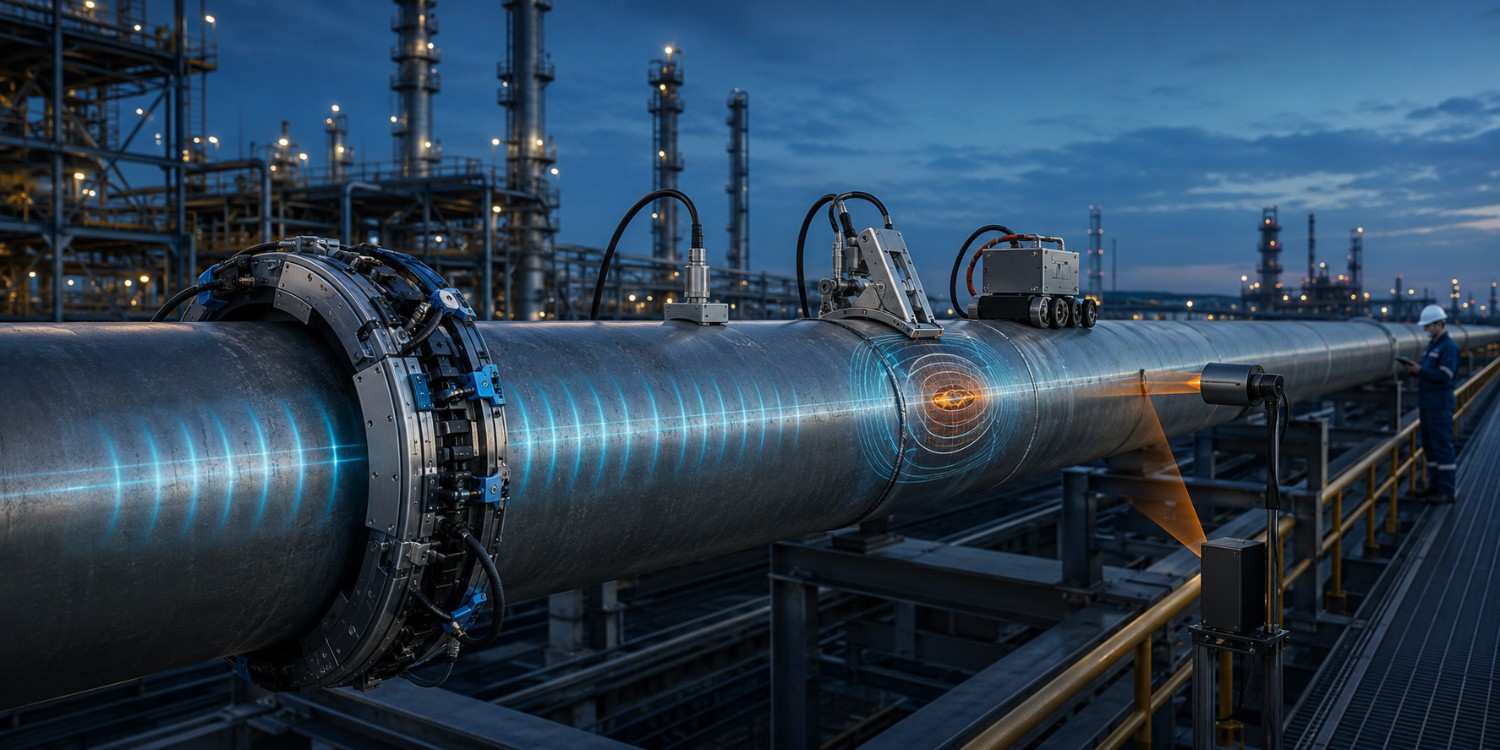
Pipeline integrity management requires multiple inspection technologies working together to detect corrosion, wall loss, and structural defects. No single inspection method can provide complete information about pipeline condition.
Long Range Ultrasonic Testing (LRUT) is widely used as a screening technology for detecting potential corrosion zones across long sections of pipeline. However, to accurately quantify defects and confirm corrosion severity, LRUT is typically combined with other Non-Destructive Testing (NDT) methods.
By integrating LRUT with complementary inspection technologies, asset integrity teams can obtain a complete understanding of pipeline condition while optimizing inspection cost and efficiency.
Why Multiple NDT Methods Are Necessary?
Different NDT methods detect different types of defects.
For example:
➤ LRUT identifies areas of potential wall loss
➤ Conventional UT measures exact wall thickness
➤ PAUT detects internal flaws or weld defects
➤ Radiography evaluates internal structural conditions
A combined inspection strategy allows engineers to verify and characterize defects more accurately.
Role of LRUT in Multi Technology Inspection Programs
LRUT serves as the screening stage in a multi-technology inspection strategy.
It provides:
➤ Rapid inspection of long pipeline sections
➤ Detection of potential corrosion zones
➤ Identification of high-risk areas
➤ Prioritization for detailed inspection
Instead of inspecting every section of pipeline in detail, LRUT helps determine where detailed inspections are actually needed.
Combining LRUT with Conventional Ultrasonic Testing (UT)
After LRUT screening identifies potential wall-loss indications, conventional ultrasonic thickness testing is often used to confirm corrosion severity.
LRUT Role
Detects possible metal loss over long distances.
UT Role
Measures precise wall thickness at specific locations.
This combination provides both screening efficiency and measurement accuracy.
LRUT and Phased Array Ultrasonic Testing (PAUT)
Phased Array Ultrasonic Testing (PAUT) is commonly used for detailed flaw detection.
When combined with LRUT:
➤ LRUT identifies suspect pipeline sections
➤ PAUT performs detailed imaging of the detected area
PAUT is particularly useful for inspecting welds, cracks, and structural anomalies identified during LRUT screening.
LRUT and Magnetic Flux Leakage (MFL)
Magnetic Flux Leakage (MFL) is widely used for corrosion detection in pipelines and storage tanks.
Combined approach:
➤ LRUT screens large pipeline networks
➤ MFL provides detailed corrosion mapping in targeted areas
This combination is particularly useful in large tank farms and pipeline corridors.
LRUT and Radiographic Testing (RT)
Radiographic testing is used to inspect internal defects in welds or pipeline structures.
After LRUT screening identifies possible anomalies, RT can confirm:
➤ Weld integrity
➤ Internal defects
➤ Structural discontinuities
RT provides visual confirmation of internal pipeline conditions
Example Workflow for Combined Inspection
A typical integrated inspection program may follow this sequence:
➤ LRUT screening of long pipeline sections
➤ Identification of potential corrosion zones
➤ Targeted UT or PAUT verification
➤ Detailed inspection using MFL or RT where required
➤ Integrity assessment and maintenance planning
➤ Follow-up monitoring and repeat inspections
This workflow ensures efficient inspection and reliable results.
Benefits of Integrated NDT Inspection Programs
Combining LRUT with other NDT technologies offers several advantages:
✔ Efficient screening of large pipeline networks
✔ Reduced inspection cost
✔ Accurate defect characterization
✔ Improved risk assessment
✔ Better maintenance planning
✔ Enhanced pipeline safety
Integrated inspection strategies allow operators to focus resources on high-risk areas.
Engineering Expertise Matters
Selecting the right combination of NDT technologies requires engineering expertise.
Factors such as pipeline geometry, operating conditions, and corrosion mechanisms must be considered when designing inspection programs.
At IAIS India PVT LTD, we support pipeline operators with:
➤ LRUT screening programs
➤ EMAT and piezoelectric guided wave technology
➤ Integration with other NDT inspection methods
➤ Engineering feasibility studies
➤ Certified Level I / II / III technicians
➤ Advanced signal interpretation and reporting
➤ Global inspection mobilization capability
Our engineering-driven approach ensures reliable pipeline integrity assessment.
Conclusion
No single inspection technology can provide a complete assessment of pipeline condition. Combining LRUT with complementary NDT methods such as UT, PAUT, MFL, and RT allows asset integrity teams to obtain accurate and comprehensive inspection results.
By using LRUT as a screening tool and applying detailed inspection techniques where necessary, operators can significantly improve pipeline safety while reducing inspection costs.
🌍 Contact Us Your Global Pipeline Integrity Partner
IAIS India PVT LTD
Specialists in Long Range Ultrasonic Testing (LRUT) & Guided Wave Pipeline Inspection
📍 Headquartered in India | UAE Operational Support | 🌎 Worldwide Deployment
📧 i@iaisindia.com
Speak with our engineering team to develop a comprehensive inspection strategy combining LRUT with advanced NDT technologies.